Signs of Rats and Mice in Your Pittsburgh Home
Most people never see the rat or the mouse until it's been going on a while. Rodents are shy. They do leave a trail, though, and if you know where to look in an old Pittsburgh house, you can catch it early.
Start with what you find, then what you hear and smell, then where to go looking.
Rice-sized or thumb-length droppings
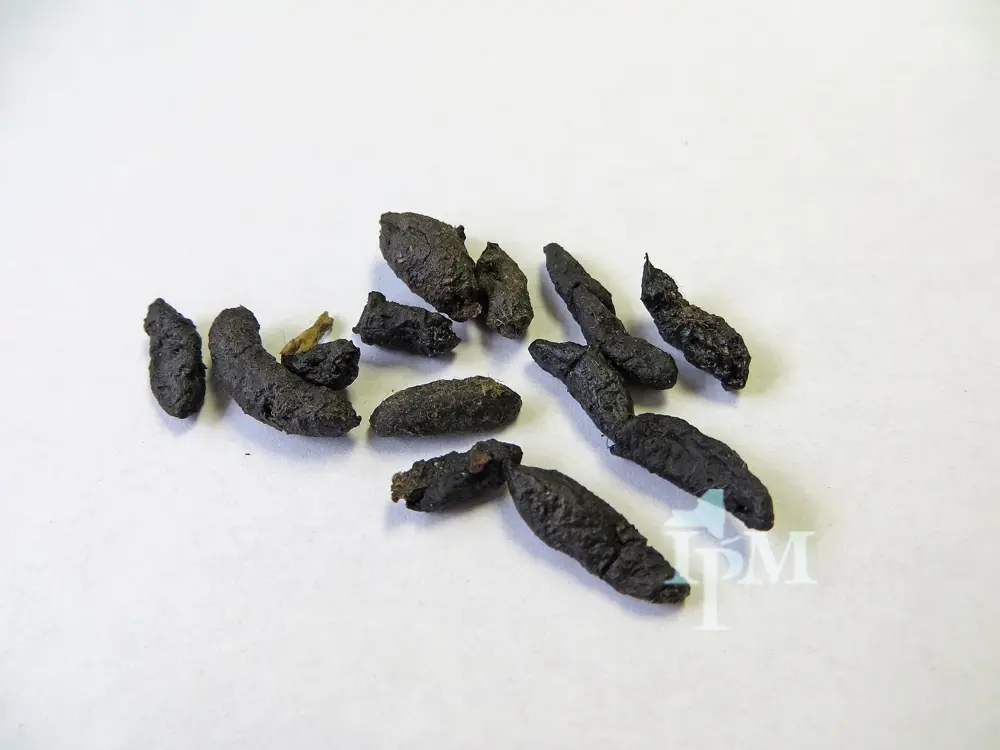
Droppings are the most common sign and they tell you which one you've got. Mouse droppings are small, about the size of a grain of rice, pointed at the ends. Norway rat droppings are a lot bigger, about three-quarters of an inch long, dark and shaped like a capsule.
Fresh ones are dark and soft. Old ones go gray and crumble. Clean an area and check it again in a few days. If new ones show up, they're still active. Rice-sized droppings in the pantry usually mean mice. Big ones by the floor drain mean rats.
Clean them up right. Gloves on, spray with disinfectant, let it soak a few minutes, wipe with paper towels, bag it, throw it out. Never sweep or vacuum dry droppings.
Scratching at 2 a.m. and a smell in the cabinet
Mice make light scratching and scurrying sounds in the walls and ceiling, mostly at night. Rats are heavier. Thumping, gnawing, something being dragged in the basement or under the floor. Hearing noises but finding no droppings doesn't rule out mice. They can live inside the walls and the attic insulation where you'll never see a thing.
A musty or ammonia smell in a closed cabinet, a basement corner or the attic usually means urine and nesting. If it's coming from above, the attic may need cleanup once they're gone. And watch the pets. A dog or cat staring at a wall or pawing at the stove is usually hearing something you can't.
Rodents chew all the time. Gnawed food boxes, chewed corners on doors and baseboards, and holes in drywall near the floor are all signs. Rats leave dark, greasy rub marks along walls and beams where they brush the same route night after night. Nests are shredded paper, fabric and insulation. Mice build them in drawers, behind appliances and in the attic. Rats nest in burrows outside or in basement clutter.
Holes by the retaining wall
Norway rats usually show themselves in the yard before they show up inside. Look for round holes 2 to 4 inches wide with smooth, packed edges and fresh dirt fanned out in front. Check along the fence, under the back stoop, beside the shed and at the base of any retaining wall. Worn paths in the grass between a hole and the food are another tell. Chipmunks and voles dig too, but their holes don't usually hug walls and slabs the way a rat's does.
Burrows like that call for yard rat control. You see a lot of them in Brookline and other hillside neighborhoods, where terraced yards and block walls make easy digging.
Basement first, then outside, then the attic
In an old city house, go to the basement first. Walk the stone or block walls, look behind the furnace and the water heater, around the floor drain and by the basement toilet. Look up at the top of the foundation where the wood sill sits on the stone.
Then go outside and walk the foundation. Gaps by the gas and water lines and the old coal chute are the usual spots. In a row house, like a lot of them in Lawrenceville, check the basement party wall.
Finish in the attic if you can get up there safely. Droppings on the boards, tunnels through the insulation, daylight at the roofline. Big old houses in Squirrel Hill often show the first signs up top.
Timing tells you something too. Fresh droppings in the kitchen in October or November is mice moving in for the winter. New holes in the yard in April or May is rats digging after the thaw. Noise in the walls in January means they're already nested by the warm pipes. If you find signs, a few snap traps along the walls (away from kids and pets) are fine while you wait. No loose poison. Most fixes end with sealing the gaps.
Questions We Get
How do I tell old droppings from new ones?
New ones are dark and moist. Old ones are dry, gray and crumbly. Clean the spot and look again in a few days.